노먼 레브레히트 칼럼 | SINCE 2012
영국의 평론가가 보내온 세계 음악계 동향
클라우스 텐슈테트, ‘사랑’이라는 이름의 지휘자
탄생 100주년을 맞이하여 돌이켜보는 텐슈테트의 천재성과 그 생애

유년의 텐슈테트와 그의 부모 ©Georg Wübbolt
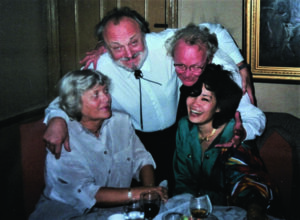
사진 중앙의 쿠르트 마주어·클라우스 텐슈테트 ©Georg Wübbolt
클라우스 텐슈테트와는 네온사인이 빛나는 미디어 룸에서 처음 만났다. 거기서 그가 가장 좋아하는 음반에 관해 이야기를 나누기로 되어 있었으나, 알고 보니 소통에 착오가 있었다. 동독에서 성장하고 활동한 클라우스는 서방 음반에 대해 잘 알지 못했고 관심도 없었다. 그는 한 시간 동안 그저 음악에 대해 이야기하는 것만으로도 행복해했다.
그 자리 이후 나는 아예 다른 사람이 된 듯했다. 독일어가 뒤섞인 영어로 클라우스가 내게 전한 말 때문이 아니라, 그의 따뜻한 관심이 내 안의 사소한 잡념을 지워버렸기 때문이다.
그 누구도 흉내내기 어려운 캐릭터
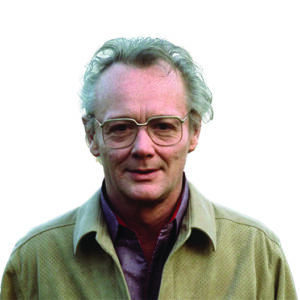
클라우스 텐슈텐트
오케스트라에도 동일한 효과가 발휘됐다. 클라우스가 런던 필하모닉에 수석지휘자로 부임한 무렵, 스트레스에 지친 현악 파트와 구세군 브라스 밴드를 연상시키는 금관 파트는 서로 마음이 맞기는커녕 좋아하지도 않았다. 그러나 한쪽 구두끈이 풀어지고 담배를 입에 문 그가 아침 리허설에 비틀거리듯 나타나자, 소리가 바뀌었다. 연주자들은 자신의 손가락이 어떻게 움직이는지 믿지 못했다. “빈필 같아요.” 누군가 말했다. 지휘봉이 아닌 인간이 만들어낸 결과였다. 한 젊은 마에스트로는 이렇게 덧붙였다. “클라우스에게 뛰어난 테크닉 같은 건 없습니다. 하지만 음악만큼은… 아예 다른 세상이죠!
지휘는 99%가 이미지다. 아바도와 무티는 다이아몬드 컷의 연미복을 입었고, 솔티는 뒷줄 단원들까지 압도했다. 불레즈는 프랑스인 특유의 태평함을 꾸며냈고, 오자와는 비틀즈 스타일의 더벅머리였다. 모두 사진발이 잘 받았다. 반면, 사시였던 클라우스는 동독 지도자 에리히 호네커 스타일의 돋보기안경을 썼고, 셔츠는 땀에 젖어버리곤 했다. 물에 빠진 부랑자처럼 팔을 휘저었으며, 어떤 비평가는 이에 대해 ‘미친 황새’라고도 썼다. 악보를 곧잘 잊어버리고 포디움 위에서 균형을 잃었다. 인간적이라고? 지나치게 인간적이었다. 그러나 바로 그렇기에 누구도 흉내 낼 수 없는, 유일무이한 존재였다.
지난 5월, 워너클래식스에서 클라우스 텐슈테트 탄생 100주년을 기념하며 CD 41장으로 구성된 박스 음반을 발매했다. 물론 그가 살아서 100세를 맞이한 것은 아니다. 그는 공장 굴뚝처럼 담배를 피웠고, 과음도 잦았다. 대형차를 엉망으로 몰았으며, 비행기 탑승 시에는 승무원과 혹시나 하는 마음으로 주머니에 윤활제를 챙겼다. 다방면으로 혼란 그 자체였지만, 음악에 있어서는 모든 것을 쏟아부으며 정확성을 추구했다. 한번은 런던필 단원들에게 집에 가서 “본인의 치부(Private Parts)를 연구해 오라”는 지시로 영국인 특유의 포커페이스를 무너뜨리기도 했다. 그 말이 어떤 의미인지 그는 분명 알았을 것이다.
그에게 음악적 구원을 가져다준 말러
1926년 헨델의 고향 독일 할레에서 오케스트라 단원의 아들로 태어난 클라우스는 손 부상으로 바이올린을 포기하기 전까지는 전도유망한 바이올리니스트였다. 10대의 지휘자였던 쿠르트 마주어가 그에게 지휘를 권했다. 쿠르트는 클라우스의 어머니가 아들에게 “왜 쿠르트처럼 되지 못하냐”라고 성내는 걸 듣기도 했다. 또한 쿠르트는 공산당 정치국을 고분고분 따른 반면, 클라우스는 당 고위층의 눈 밖에 나며 해안 도시인 슈베린으로 쫓겨났다. 쿠르트는 호네커에게 클라우스를 보내달라고 청했고 클라우스는 45세의 나이로 자유를 얻었으나, 그가 일자리를 구할 수 있었던 곳은 독일의 외딴 해군 도시 킬(Kiel) 뿐이었다.
이후 캐나다인 스카우트에게 발탁된 클라우스는 토론토에서 눈부신 데뷔를 치르며 미국 5대 오케스트라의 러브콜을 받는다. 하지만 곧 신경쇠약에 시달리며 1년간 휴식을 갖는다. “그때 말러를 발견했죠.” 그는 회상했다. “말러 역시 고통을 겪었더군요.”
결코 언급된 적 없던, 클라우스의 삶의 비극은 동독에서 벌어진 딸의 자살이었다. 스스로를 탓하던 그는 말러의 ‘죽은 아이를 그리는 노래’에서 의미를 찾고 베토벤으로부터 구원을 얻었다. 헤르베르트 폰 카라얀은 클라우스를 “진정한 최후의 카펠마이스터”라 극찬하며 베를린 필하모닉의 지휘를 맡아달라 초청했다. 하지만 카라얀이 그의 R. 슈트라우스 신보에 대해 물었을 때, 거짓말을 할 수 없었던 클라우스는 틀린 음을 나열했고 다시는 초대받지 못했다.
1980년대 말러 부흥기가 극에 달하자, 그는 EMI에서 말러 교향곡 전집을 녹음해 그 수익금으로 어린 시절 드림카였던 롤스로이스를 구매했다. 다음 날 아침, 그는 킬의 이웃들이 차를 긁어놓은 것을 발견한다. 스크래치는 그가 차를 팔 때까지 매일 같이 반복되었다.
암이 후두로 퍼지며 클라우스는 또 한 번 긴 공백기를 맞았다. 이후 그가 영국 로열 페스티벌 홀에 들어설 때마다 관객은 기립박수를 쏟아냈다. 발코니석 난간에서 펄럭이는 현수막에는 다음과 같이 적혀 있었다. “복귀를 환영합니다, 클라우스!” 런던 땅에서 이런 수준의 환대를 받은 지휘자는 아무도 없었다.
한번은 쭈뼛대던 10대 소녀와 함께 그를 만나러 백스테이지로 간 적이 있었다. 클라우스는 소녀를 소파에 앉히고 몸끼리 닿지 않는 선에서 어깨 뒤로 팔을 둘렀다. 소녀가 알아들을 수 없는 언어로 우리끼리 이야기를 나누는 20분간 그 소녀는 꼼짝도 하지 않았다. 그는 늘상 이렇게 사람을 매혹했다.
경쟁자들은 클라우스를 독수리 앞 참새 취급했고 몇몇은 폄훼의 말을 중얼댔지만, 그 뛰어난 카를로스 클라이버도 TV에서 말러를 지휘하는 클라우스를 보며 매료되었다. 클라이버는 이렇게 적었다. “전혀 교묘하거나 피상적이지도 않고, 자의식 과잉도 아니었다. ‘진실함’ 그 자체였다.”
그의 숨결을 조금이라도 느껴보고 싶다면!
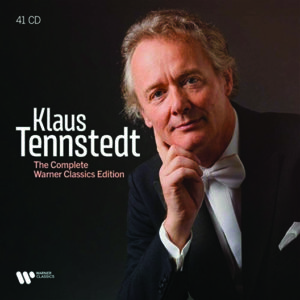
클라우스 텐슈테트 전집(2026)
Warner Classics 2685420144
클라우스의 공연 취소가 복귀 소식보다 더 잦았던 시절, 나는 그의 명료한 음악을 다시는 듣지 못할 걸 알면서도 말러의 대작인 교향곡 8번의 리허설에 매번 참석했다. 그는 영국 옥스퍼드 대학교에서 학생 오케스트라를 지도하는 조건으로 명예 박사 학위를 받았다. 1994년 6월의 어느 아침, 클라우스는 자신의 약점과 두려움에 대해 털어 놓았다. 그러고는 학생들에게 카를 마리아 폰 베버의 10분짜리 서곡을 지도했는데, 모두가 아직도 기억할 만큼 명강의였다. 나중에 클라우스는 조용히 물었다. “내가 다시 지휘를 할 수 있을까요?”
안타깝게도 아니었다. 클라우스 텐슈테트는 1998년 1월, 71세의 나이로 자택에서 눈을 감는다. 그때 나는 다시는 그와 같은 지휘자를 만날 수 없으리라는 것을 깨달았다. 그는 신이 내린 재능과 자수성가한 사람 사이의 거대한 격차를 나타내는 전형이었다. 클라이버, 그리고 어쩌면 젊은 시절의 카라얀 정도만이 클라우스와 비견될 수 있을 것이다.
워너클래식스가 엄선한 음반 전집에는 대낮 스튜디오의 향기가 풍겨온다. 천재성은 라이브에서, 더욱이 어둠이 깔린 후에야 빛을 발한다. 동일한 인상은 온라인에서도 찾아낼 수 있다. 미국 메트로폴리탄 오페라와 함께 한 이성을 초월하는 강렬한 ‘피델리오’ 공연이 유튜브에 남아 있다. 미네소타의 말러 실황과 베를린의 브루크너 실황은 숭고한 찬란함 그 자체다. 미국 탱글우드 페스티벌의 ‘트리스탄과 이졸데’ 마지막 장면은 그야말로 죽을 지경이다. 클라우스를 생각할 때 마음속에 떠오르는 단어는 바로, 사랑이다.
번역 evener
Norman Lebrecht Column
노먼 레브레히트 칼럼의 영어 원문을 함께 제공합니다.
본 원고는 본지의 편집 방향과 일치하지 않을 수 있습니다.
My first encounter with Klaus Tennstedt was in a neon-lit media room where we were supposed to be discussing his favourite recordings. It turned out something got lost in translation. Klaus, coming from the German Democratic rump-state, knew hardly any western releases and cared less. He was happy just to chat about music for an hour.
I came away transformed. Not by anything Klaus said to me in jumbled German-English. It was having his beam of attention that erased every trivial thought from my mind.
I saw the same effect with orchestras. Klaus arrived as principal conductor of the London Philharmonic, an array of stressed-out strings and Salvation Army brass who couldn’t agree on much, or even like each other. Klaus stumbled into a morning rehearsal, one shoelace undone, fag still between his lips, and the sound changed. Players could not believe what their fingers yielded. ‘We felt like Vienna,’ one said. It was not the baton, just the man. ‘Klaus didn’t have a great technique,’ observed a young maestro, ‘but the music… What a difference!’
Conducting is 99 percent image. Abbado and Muti wore diamond-cut tails. Solti terrorised the back rows. Boulez affected Gallic insouciance, Ozawa a Beatles mop-top. All very photogenic. Tennstedt, squinting, wore Erich Honecker spectacles and a shirt that was soaked in sweat within minutes. He waved his arms like a drowning tramp (‘a demented stork’ wrote one critic). He lost his place in the score and his balance on the podium. Human? All too human. Inimitable and unique.
Warner are marking his 100th birthday this month with a 41-disc box, not that he’d have reached 100. He smoked like a factory stack and drank to excess. He drove big cars badly and flew with a tube of lube in his pocket in case he got lucky with an air hostess. He was chaotic in all things except music, where he demanded precision and gave his all. He once ordered the LPO to go home and ‘study your private parts’.
Collapse of English po-faces. I think he knew what he was doing.
An orchestra player’s son in Halle – ‘Handel’s town,’ he’d prompt – Klaus was a promising violinist when a hand deformation forced him to give up. Kurt Masur, a teenaged conductor, suggested he give it a go. Masur heard Klaus’ mother complain, ‘why can’t you be more like Kurt?’ While Masur became a Politburo pet, Klaus annoyed party bigwigs and was banished to Schwerin, a seaside town. Masur petitioned Honecker to let Klaus leave. When Klaus reached freedom, aged 45, the only job he could obtain was in the remote naval town of Kiel.
Spotted by a Canadian scout, his Toronto debut proved so incandescent that America’s Big Five came begging for dates. Klaus promptly had a nervous breakdown and took a year out. ‘It was then that I discovered Mahler,’ he told me. ‘Mahler, too, had suffered.’
The tragedy of his life, never mentioned, was his daughter’s suicide in the GDR. Klaus, blaming himself, found meaning in Mahler’s Death of Children songs and redemption in Beethoven. The almighty Herbert von Karajan acclaimed him as ‘the last true Kapellmeister’ and invited him to conduct the Berlin Philharmonic. But when Karajan asked what Tennstedt thought of his new Richard Strauss disc Klaus, unable to lie, listed every false note. He was not reinvited.
Cresting a 1980s Mahler revival, he recorded a symphonic cycle for EMI and bought a Rolls-Royce, his boyhood dream, on the royalties. Next morning in Kiel, he found the German neighbours had scratched the paintwork. They did so every day until he sold the car.
Cancer grabbed his throat and took him out for long stretches. Each time he entered the Royal Festival Hall, the audience would rise to its feet in acclamation. A banner fluttered from a balcony rail: ‘Welcome back, Klaus!’ No other conductor in London ever had such a reception.
I took an awkward adolescent to see him backstage. Klaus beckoned her to his sofa, placing an arm around, but not touching, her shoulder.
She sat motionless, absorbed for twenty minutes as he chatted away to me in a language. That’s what he did: he enchanted.
Rivals viewed him as sparrows to an eagle. Some muttered deprecations. Carlos Kleiber, the most accomplished, saw Tennstedt conduct Mahler on television and was smitten. ‘Never clever or perfunctory, never self-conscious,’ wrote Kleiber. ‘GENUINE’.
When his cancellations exceeded comebacks, I attended every orchestra-only rehearsal of Mahler’s mega-eighth symphony, knowing I would never hear the music again with such lucidity. He accepted a doctorate honoris causa from Oxford University in exchange for rehearsing the student orchestra. I spent the morning with him in June 1994, hearing about his frailties and his fears. He then worked the students through a ten-minute overture by Carl Maria von Weber that none of them has forgotten. Afterwards he whispered: ‘Will I conduct again?’
He never did. Klaus Tennstedt died at home, aged 71, in January 1998, and I knew we’d not see his like again. He exemplified the gulf between the divinely gifted and the merely self-made. Kleiber, and perhaps the young Karajan, were his only equals.
Essential as the Warner set is, it smells of daytime studios. Genius demands a live response, ideally after dark. Some inspirations can be found online. Youtube has a Metropolitan Opera Fidelio of an intensity that defies reason. There are live Mahlers from Minnesota and a Berlin Bruckner of unearthly iridescence. A Tristan end-scene from Tanglewood is literally to die for. The word I am looking for, the one that springs to mind when I think of Klaus, is: love.
글 노먼 레브레히트
영국의 음악·문화 평론가이자 소설가. ‘텔레그래프‘지, ‘스탠더즈‘지 등 여러 매체에 기고해왔으며, 지금 이 순간에도 자신의 블로그(www.slippedisc.com)를 통해 음악계 뉴스를 발 빠르게 전한다